This site is not affiliated with any diamond retailer, laboratory, or certification body. Independent comparison resource. Some links may be affiliate links.
61% of 2026 engagement rings feature lab-grown

Lab-Grown Diamond Engagement Ring Guide: Shapes, Settings, and What to Buy in 2026

An independent guide to choosing a lab-grown diamond engagement ring. No retailer to push, no inventory to sell. Just the information you need to make the right choice.
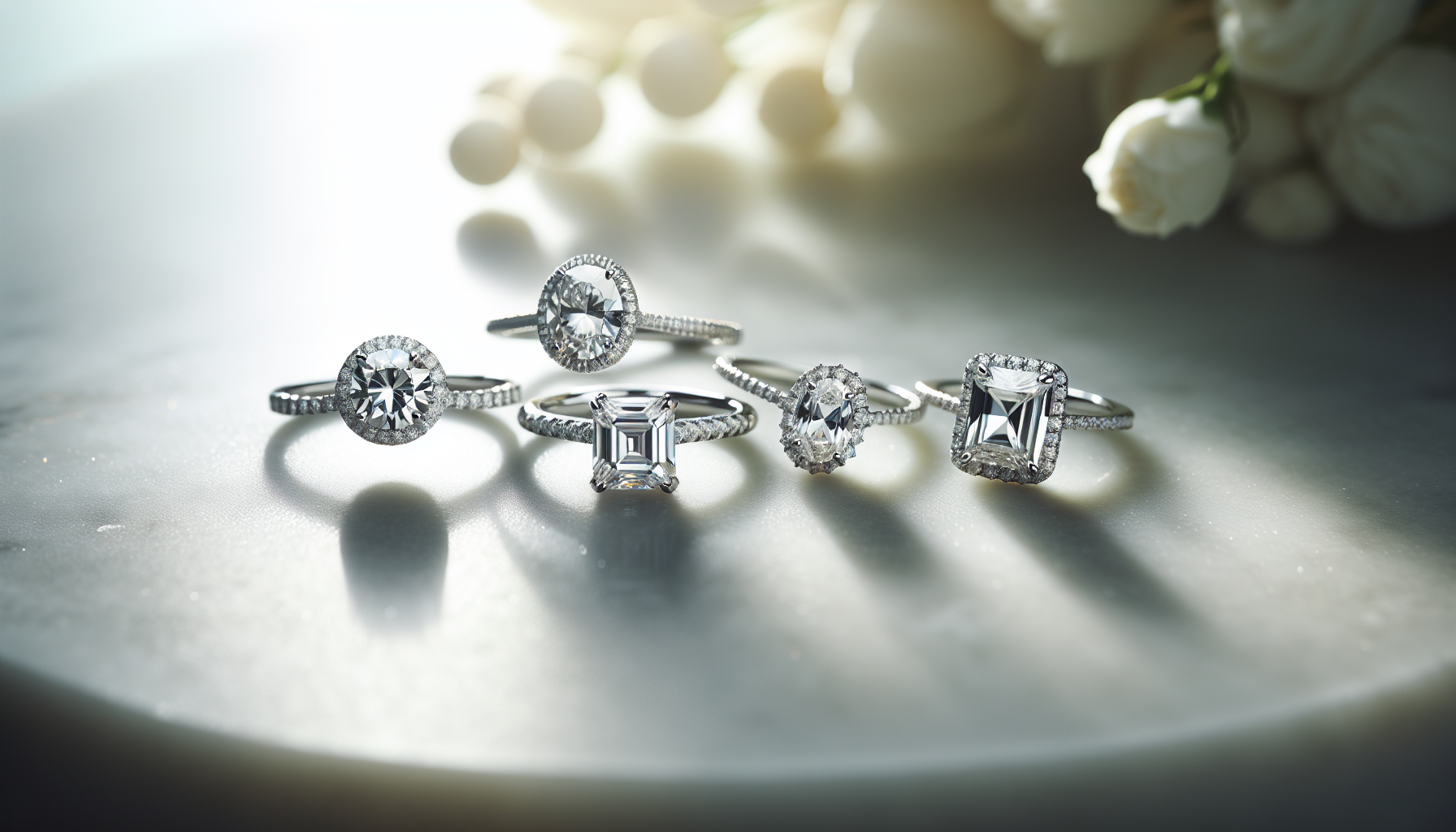
Five engagement ring styles on white marble: round solitaire, oval halo, princess cut, emerald cut, cushion cut
61%
of 2026 engagement rings use lab-grown centre stones (The Knot)
2.45 ct
average lab-grown centre stone size in 2026 (up from 1.31 ct in 2019)
70%
average saving vs natural diamond of equal quality
55%
of buyers choose round brilliant shape

Diamond Shapes Guide

Round Brilliant
Pros

Most sparkle, most popular, best resale, most forgiving of colour

Cons

Most expensive per carat, no elongating effect

Sweet spot

Excellent cut, G-H colour, VS2

Oval
Pros

Elongating finger effect, excellent value per carat, trending strongly

Cons

Shows colour more than round, can have bowtie effect

Sweet spot

Very Good+ cut, F-G colour, VS1

Cushion
Pros

Romantic vintage feel, good sparkle, popular for halo settings

Cons

Less face-up size than oval or marquise

Sweet spot

Excellent cut, G-H colour, VS2

Princess (Square)
Pros

Modern look, good sparkle, slightly less expensive than round

Cons

Sharp corners require protective setting, less popular now

Sweet spot

Excellent cut, G-H colour, VS2-SI1

Emerald
Pros

Sophisticated, large face-up appearance, shows clarity well

Cons

Shows inclusions more, shows colour more, requires high clarity

Sweet spot

N/A cut, E-G colour, VVS2-VS1

Pear
Pros

Elongating effect, unique look, excellent value per carat

Cons

Shows colour at tip, requires protective prong at point

Sweet spot

Very Good+ cut, F-G colour, VS1

Budget Planning: What Lab-Grown Gets You

Round brilliant, Excellent cut, IGI/GIA certified. Approximate retail prices, April 2026.

BudgetLab-GrownNatural Equivalent
$1,000 - $1,5001.0-1.5ct, G-H, VS20.35-0.45ct, G-H, VS2
$1,500 - $2,5001.5-2.0ct, F-G, VS1-VS20.5-0.6ct, G-H, VS2
$2,500 - $4,0002.0-2.5ct, E-F, VS10.65-0.85ct, G, VS2
$4,000 - $6,0002.5-3.5ct, D-E, VVS2-VS10.9-1.1ct, G-H, VS2
$6,000 - $10,0003.5-5.0ct, D-E, VVS1-VVS21.2-1.5ct, G, VS1-VS2

Setting Styles

Solitaire

Single diamond, no side stones. Timeless, maximises the centre stone, easy to resize, suits all shapes.

Halo

Centre stone surrounded by small diamonds. Increases perceived size of centre stone by 0.5+ carat visually. Popular with cushion and oval.

Three-Stone

Centre diamond flanked by two side stones. Symbolises past, present, future. Good for round and oval centres.

Pave / Micro-Pave

Small diamonds set along the band. Adds sparkle and brilliance without obscuring the centre stone. Very popular in 2026.

Bezel

Metal rim wraps around the diamond. Protective for active lifestyles. Modern look. Slightly reduces face-up appearance.

Cathedral

Band arches up to meet the centre stone. Classic, elevated look. Suits round and cushion shapes well.

Metal Choice

Platinum

Most durable, hypoallergenic, naturally white (does not need rhodium plating). More expensive. Best for heirloom pieces.

White Gold

Rhodium-plated yellow gold. Similar look to platinum at lower cost. Requires replating every 2-3 years.

Yellow Gold

Warm tone, trending strongly in 2026. Forgiving of lower colour grades in the centre stone (G-H looks great in yellow gold).

Rose Gold

Romantic, feminine aesthetic. Trendy since 2015. Copper alloy - avoid if nickel/copper allergy concerns.

Engagement Ring FAQs

What is the best lab-grown diamond for an engagement ring?
For a round brilliant lab-grown engagement ring, prioritise Excellent cut (never compromise on this as it determines sparkle), E-G colour (affordable with lab-grown pricing), VS1-VS2 clarity (eye-clean at a reasonable price), IGI or GIA certified only. This specification at 1.5-2 carats is available for $1,500-2,500 from retailers like Ritani, James Allen, or Brilliant Earth, a budget that would buy only a 0.5-carat natural of equivalent quality.
Should I buy a lab-grown diamond engagement ring?
Lab-grown engagement rings now account for 61% of engagement ring sales in 2026. They allow buyers to get a significantly larger, higher-quality stone for the same budget. The main trade-off is lower resale value (10-30% vs 20-50% for natural). For most couples who plan to keep the ring, lab-grown offers excellent value. The decision comes down to personal values around tradition, budget priorities, and whether you value size or rarity more.
What shape engagement ring is most popular in 2026?
Round brilliant remains the most popular shape, accounting for approximately 55% of engagement ring centre stones. Oval has risen significantly and now accounts for around 20% of sales, driven by its elongating effect and excellent value per carat. Cushion, princess, and emerald cut follow. For lab-grown specifically, oval offers particularly good value as it shows less colour than round and costs less per carat while providing excellent face-up size.
How big of a lab-grown diamond can I get for $3,000?
With a $3,000 budget for a lab-grown diamond, you can expect a 2.0-2.5 carat round brilliant G/VS2 with Excellent cut from a reputable certified retailer. The equivalent natural diamond for $3,000 would be approximately 0.6-0.75 carat. The size difference is dramatic and represents the primary appeal of lab-grown for engagement ring buyers who want maximum visual impact from their budget.
Price comparison →Where to buy →Full buying guide →